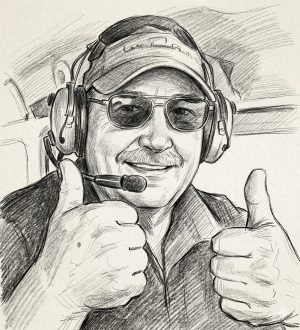
How would you answer the question, “How do you learn?” Each of us has a preferred way of learning. Some learn best by listening and watching, others by reading, and for me, hands-on experience works best. Our learning style is often a blend of several approaches, or, in educational terms, “modalities.”
In 1998, I came from Wisconsin to lead the woodshop program at Lake Placid High School. Although the program was in rough shape, I was in my element, and it did not take long to get it back on track. The key to making it run smoothly was giving students the hands-on activities they wanted.
After the first year, two programs emerged that took hands-on learning to a new level. We launched the Green Dragon Chair Company, a student-run business that sold Adirondack chairs and accessories. Over the years, we sold more than 3,000 chairs and accessories to customers in every state, including Hawaii and Alaska. We operated it like a real business, and the profits went back into the shop to upgrade and maintain tools and equipment. When I left the school to move into administration, the teachers who followed me did not continue the program, which was sad to see.
The other program, which began during the 1999–2000 school year, is still thriving. This year marks the 25th anniversary of the Highlands Aviation and Aerospace High School Program. Technically, it would be 26 years, but we lost one year when I moved to administration and was not at Lake Placid High School.
What began in the shop as an effort to help a community member assemble an experimental aircraft, and later expanded to radio-controlled aircraft, eventually led me to write grants that allowed us to build a facility on the flight line at Sebring Regional Airport. Today, students from all three county high schools attend the program during the school day. It has earned national recognition as a “best practice” and as a model for building community partnerships that expand youth aviation education.
The chair company and aviation program involved different activities, but they shared the same important outcome: students developed transferable skills they could use in the future. Those skills included problem solving, initiative, teamwork, meeting deadlines, doing quality work, asking for help when needed, taking responsibility, showing up on time, planning the work, and working the plan, among many others. Building chairs and aircraft were the activities; the lifelong skills were the real product.
The programs were designed around “Project-Based Learning.” When students understand a project’s purpose and are excited to participate, learning accelerates. They gain new skills and often experience something they never imagined doing. About a month into the aviation program at the airport hangar, I enjoyed pausing the class. Students would look at me as if something were wrong. I would say there was no problem, then ask them to think about how they felt during their first few days in the program compared with how they felt now, and to recognize the skills they had learned. Their expressions said it all: “Yes, I accomplished something I did not think I could do.” That is the power of project-based learning.
So, congratulations to our Highlands Aviation and Aerospace Program on 25 years of helping build a better future for our youth. Listen to today’s podcast to learn more about the aviation program and hear from some of its students.
John Rousch is a columnist, podcaster, and a 58-year veteran educator. He can be reached at 863-273-0522 or johnrousch73@gmail.com. Check out “Flightlines – The Stories Behind the Stories” on YouTube. Website: flightlinestories.com