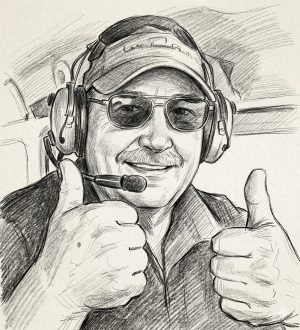
As you walk into the entrance there is a Cristian Eagle multicolored biplane hanging from the ceiling. To the left is the entrance to the corporate offices of the Experimental Aircraft Association, to the right the entrance to one of the most amazing collections of aircraft in a museum that traces aviation history and the pioneer aviators who pushed the envelope of design and function.
Straight ahead is a balcony overlooking an atrium that has another historical aircraft hanging, now at eye level. Lockwood AirCam 1 is there in blue with twin engines that were the driving force of the design and its incredible performance. Born out of necessity to complete a National Geographic photo assignment in the African Congo, it is an example of form and function created from the mind of an aeronautical engineer who said, “I have a better idea.” If you Google the AirCam story, this is what you find.
“The Lockwood AirCam was originally developed in 1995 by aviation designer Phil Lockwood, based in Sebring, Florida. It was purpose-built for a National Geographic expedition over the remote Ndoki Rain Forest in the Congo to safely shoot low-altitude wildlife photography over unlandable jungle terrain.
The Origin Story & Development
- The Problem: In the 1980s, Lockwood flew single-engine ultralights for film crews in Africa. The planes were fantastic for getting low, slow camera shots, but flying over hostile geography where a forced engine failure meant certain loss made him uncomfortable.
- The Commission: When National Geographic photographer Nick Nichols requested a low-altitude aircraft for dense, unlandable regions of the Congo, Lockwood insisted on a highly redundant twin-engine aircraft that could take off and climb on just one engine.
- The Build: Utilizing his background in ultralight design (specifically the popular “Drifter”), Lockwood drafted the aircraft and built the first prototype in just six months. The prototype was then shipped to Africa, successfully reassembled, and used for hours of rigorous photography over the canopy.
When Lockwood returned to Florida, he built a second AirCam for personal use and debuted it at the Sun ‘n Fun and EAA AirVenture Oshkosh fly-ins. The open-cockpit twin-engine design, which offered incredible visibility and STOL (Short Take-Off and Landing) capabilities, became a massive hit. The phones began ringing off the hook, leading Lockwood to offer it as a highly popular amateur-built kit aircraft.”
That is the story that is common knowledge. What we will explore further are the stories behind the Lockwood AirCam. How the Congo at that time was experiencing a revolutionary civil war. The U.S. State Department closed the embassy and instructed American citizens to leave the country immediately, but Phill stayed to finish the mission. As the civil war unfolded, gunfire were things Phil and his team had to navigate, and the mission took more time than expected.
The story of the fate of AirCam 1 and how it came back to the United States after it was left in the Congo is another story itself.
We will explore all the details and the stories behind the stories in a podcast available today on YouTube and other podcast platforms. These stories are a testament of courage, determination, and an extraordinary example of form and function being told by Phil Lockwood.
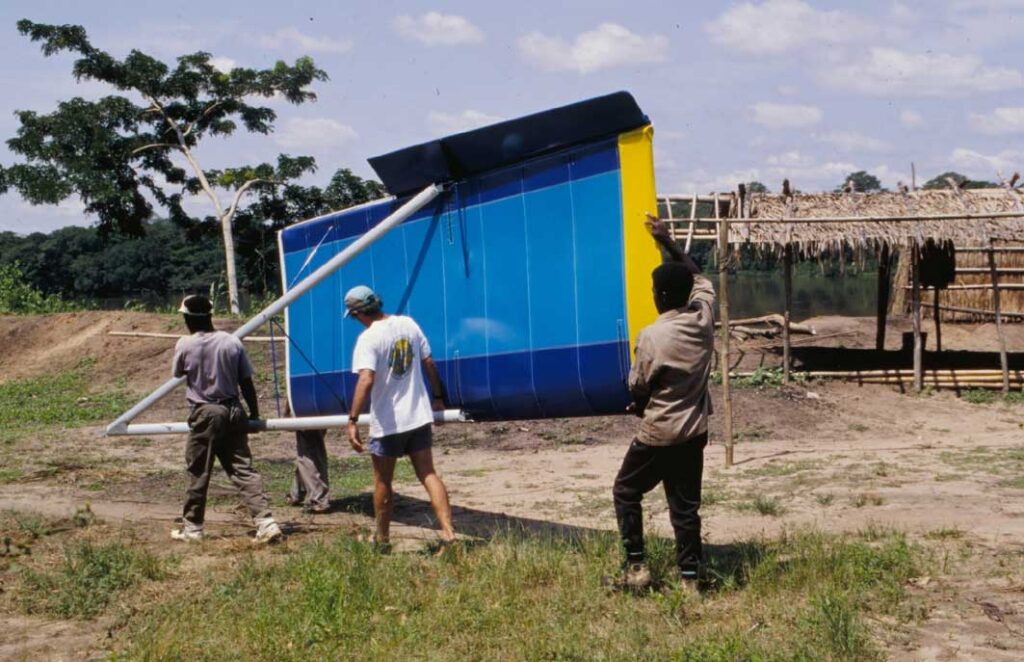
Carrying a wing from storage to reassemble the aircraft for the second year of flying and research.
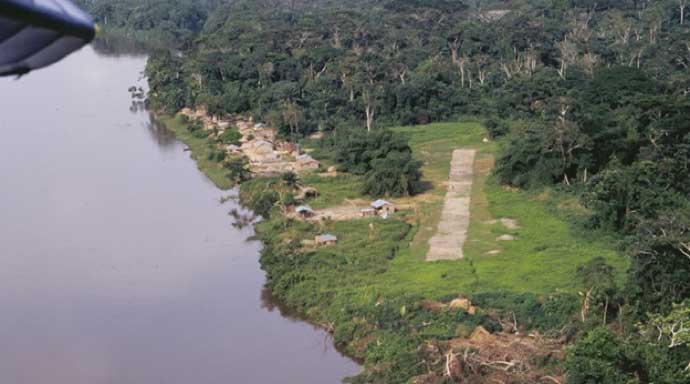
The 600 ft airstrip in Bomassa. For reference, the small structures are about the size of a typical backyard storage shed.
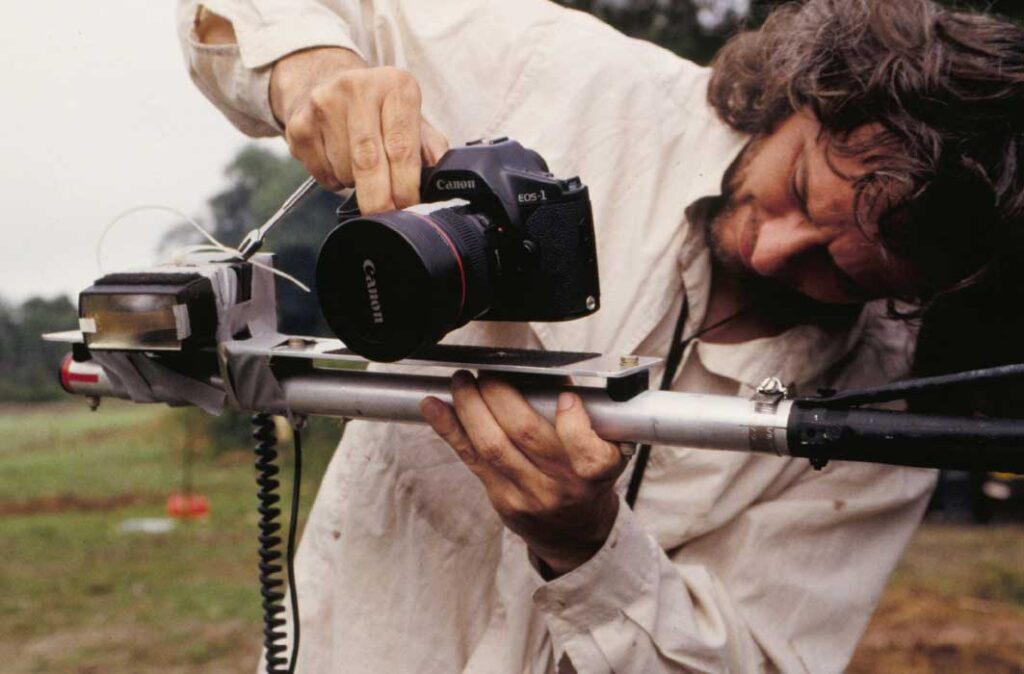
Nick is mounting a camera on the wing time camera mount.
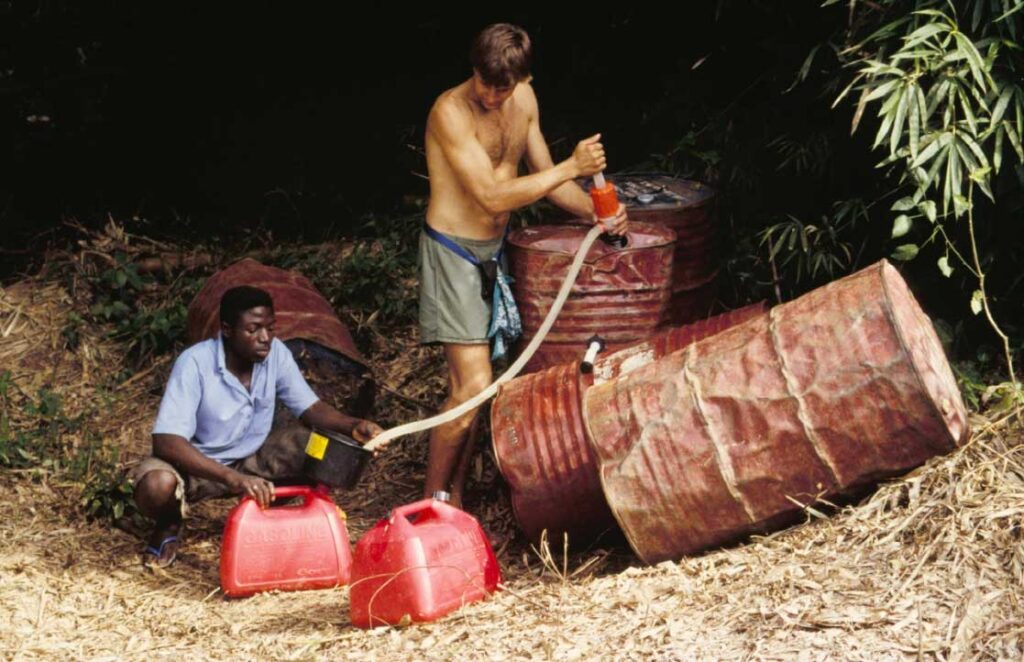
The fuel farm. We brought the fuel in 55-gal drums up the Sangha River from Ouesso in dugout canoes.
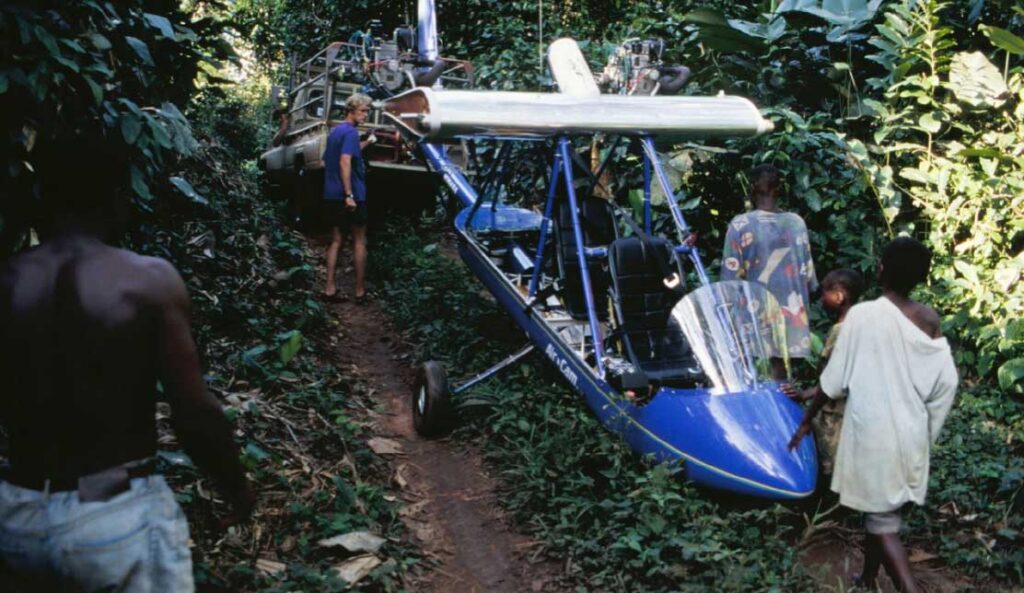
Hauling the AirCam fuselage through a section of the forest to or from storage.
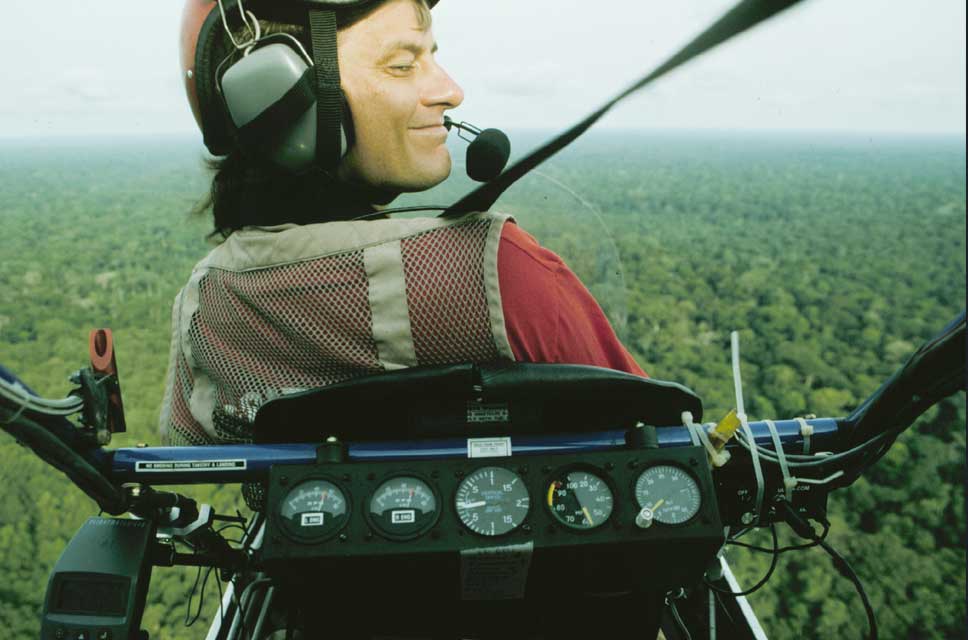
Nick up front.
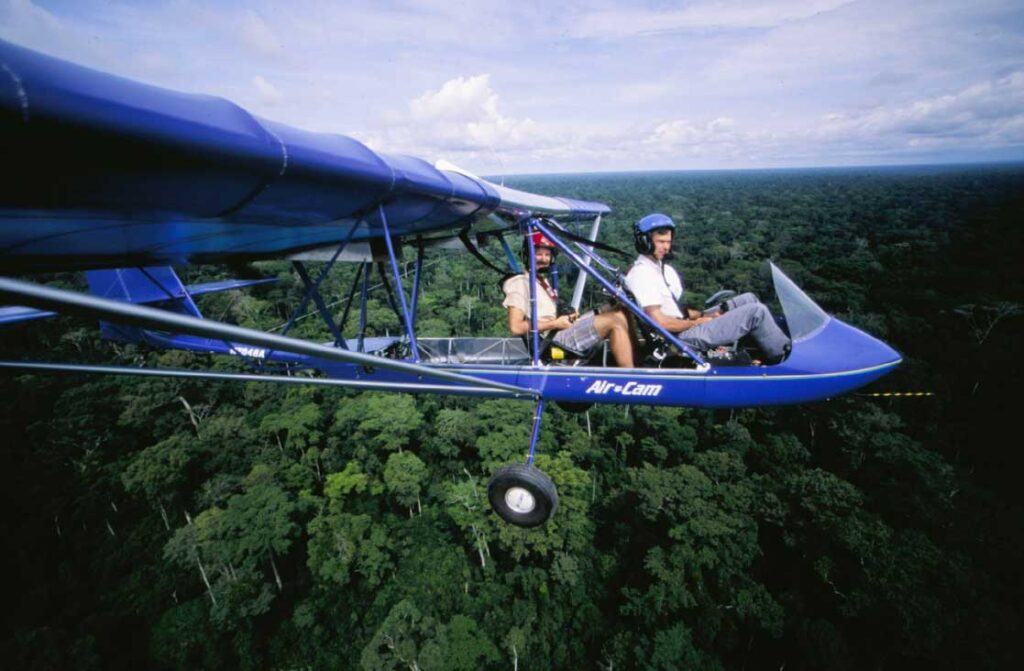
This picture is Phil flying over the rain forest with one of the researchers in the back. This would have been a mid-day flight. The morning and evening flights were almost all with Nick (Michael) Nichols up front.
John Rousch is a columnist, podcaster, and a 58-year veteran educator. He can be reached at 863-273-0522 or johnrousch73@gmail.com. Check out “Flightlines – The Stories Behind the Stories” on YouTube: “Flightlinestories.com”.